
What Are You Looking For?

Gastroesophageal reflux disease (GERD) is one of the most prevalent chronic gastrointestinal disorders which affects nearly 20% population worldwide, with diverse and non-specific symptoms that create significant diagnostic challenges. Traditional diagnostic methods, including symptom questionnaires, PPI trials, endoscopy, and impedance-pH monitoring, are often limited by invasiveness, low specificity, or complex operation. Pepfast is a novel saliva-based lateral flow in vitro diagnostic device for the qualitative detection of pepsin, providing a non-invasive, rapid, and objective auxiliary approach for the clinical assessment of GERD. This article briefly introduces the scientific basis of pepsin as a reflux biomarker, the operating procedure and clinical value of Pepfast.
Introduction to Pepfast
Pepfast is a pepsin detection device lauched by Maxhealth Innovative Meditech based on UK core technology, dedicated to the auxiliary diagnosis of gastroesophageal reflux disease. It uses highly specific human monoclonal antibodies against pepsin and can obtain clear results within 15 minutes. The device does not require centrifugation or other laboratory equipment, which simplifies the clinical operation process while maintaining high diagnostic accuracy and reliability.
Pepfast has obtained NMPA Class II certification, CE marking and FDA clearance, and is suitable for use in gastroenterology, otorhinolaryngology, respiratory medicine and primary care institutions. Clinical verification shows that it has good consistency and diagnostic performance, and can be operated by patients under clinical guidance to ensure standardized operation and reliable results.
Pepsin as a Specific Biomarker for Reflux-Related Diseases
Pepsin is a proteolytic enzyme uniquely produced by gastric chief cells. Its presence in the esophagus, pharynx, or oral cavity indicates the occurrence of gastroesophageal reflux, making it a specific objective biomarker for reflux events [1].
A clinical study by Hayat et al. (2015) confirmed that salivary pepsin testing can effectively distinguish patients with reflux-related symptoms from those with functional heartburn, providing high-level clinical evidence for the diagnostic value of pepsin [1].
Operational Procedure of Pepfast
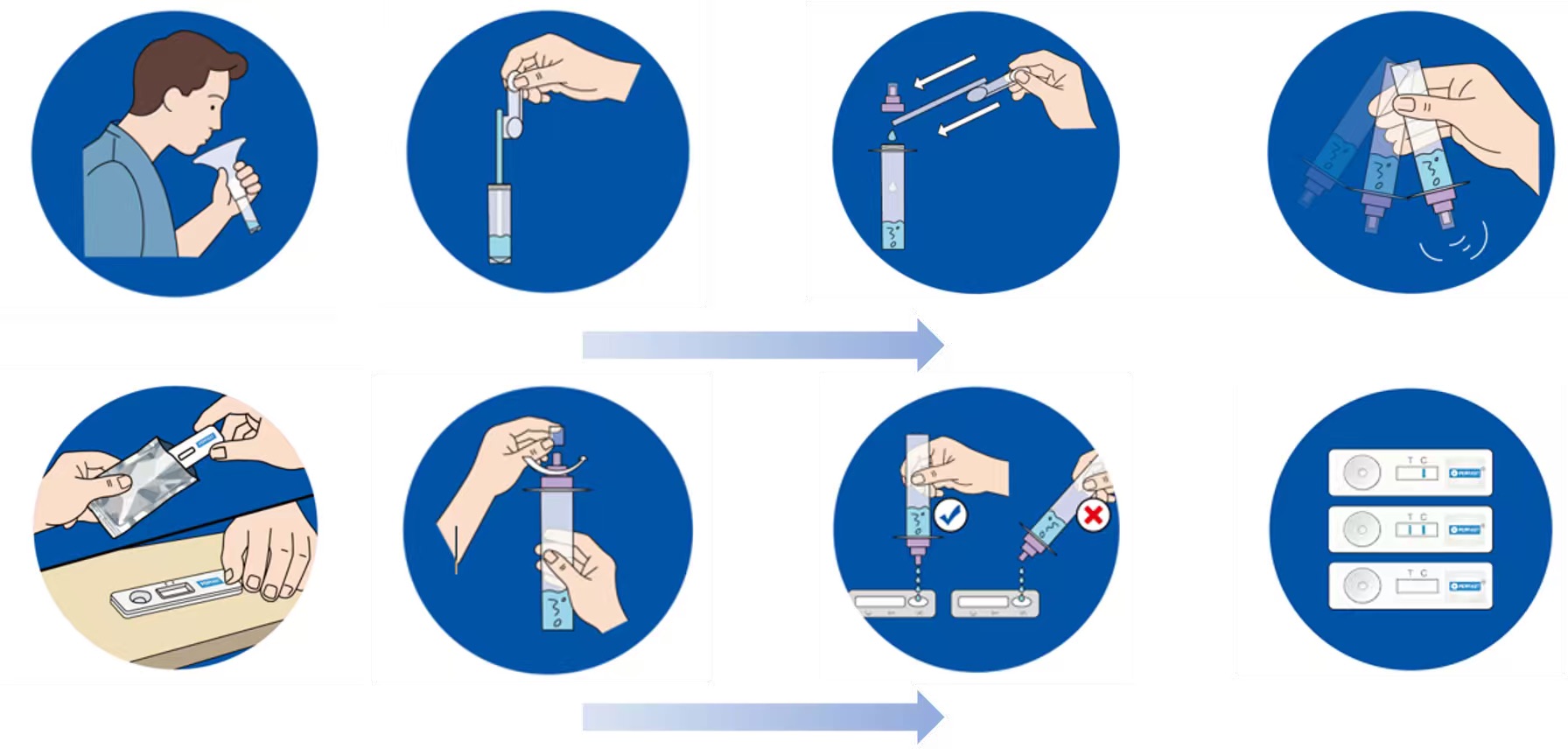
Pepfast is simple to operate and does not rely on laboratory instruments. Before sampling, individuals should avoid eating, carbonated drinks or smoking which will trigger reflux for at least 60 minutes to ensure sample validity.
After collecting saliva and mix it with the migration buffer, the mixed solution is directly added to the test kit, and the result can be read after 15 minutes. A single control line indicates a negative result, showing the patient was not refluxing at the time sample was collected; while both test line and control line indicate a positive result which shows the patient is refluxing gastric content and can be treated for reflux; no control line indicates an invalid test and needs to be repeated.
Clinical Value of Pepfast
Pepfast provides a standardized, non-invasive, and rapid auxiliary diagnostic solution for GERD, helping clinicians objectively confirm reflux events and reduce diagnostic bias caused by subjective symptom reports. It is particularly valuable in the initial screening of suspected reflux patients, differentiation between reflux-related symptoms and functional heartburn, and reduction of unnecessary invasive examinations and prolonged empirical PPI therapy. With reliable performance and simplified operation, Pepfast optimizes the clinical management pathway for GERD and promotes precise and personalized intervention for patients with suspected reflux.
References
1. Hayat JO, Gabieta-Somnez S, Yazaki E, et al. Pepsin in saliva for the diagnosis of gastro-oesophageal reflux disease. Gut. 2015; 64: 373–380.
❓Frequently Asked Questions
1. Who can perform the Pepfast test?
Pepfast can be operated by doctors as well as patients under clinical guidance to ensure standardized operation and reliable results.
2. How long is the Pepfast result valid after the test is performed?
The result appears within 15 minutes and should be read during this window. If more than 30 minutes have passed, the result is considered invalid. Please read the result within the specified timeframe for accurate interpretation.
3. Is there any age restriction for using Pepfast?
There is no specific age restriction. However, for infants and young children who are unable to spit on their own, a healthcare professional may need to collect the sample using a straw or aspirator. For elderly individuals, saliva may be thicker—please avoid collecting samples that contain sputum to ensure accurate results.



Copyright @ 2026 Maxhealth Innovative Meditech (Wuxi) Ltd All Rights Reserved.  Network Supported
Leave A Message