
What Are You Looking For?

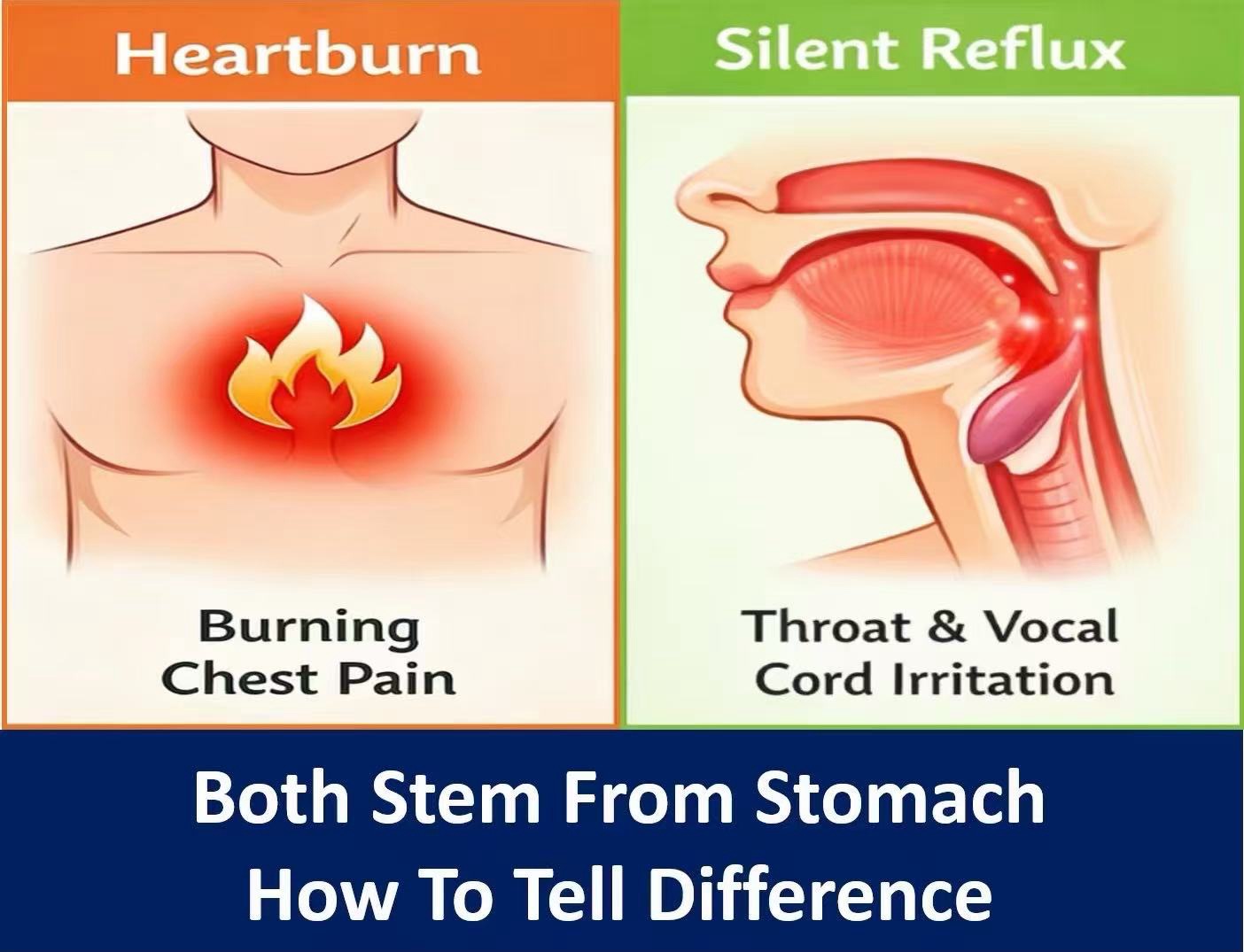
That burning sensation in your chest after a spicy meal? That's classic heartburn, and it's hard to ignore. But what if your main complaint is a persistent tickle in your throat, a nagging cough, or the feeling of a lump that won't go away—without any burning sensation at all? You might be experiencing silent reflux, medically known as Laryngopharyngeal Reflux (LPR).
While both conditions stem from stomach contents traveling in the wrong direction, they affect different areas and present with vastly different symptoms. Understanding the difference is the first step toward finding the right answers. This article will clarify the distinct signs of heartburn and silent reflux, and explain why silent reflux is so often missed or misdiagnosed.
What is Heartburn?
Heartburn is not a disease itself, but a symptom—specifically, a burning sensation in the chest, just behind the breastbone. It typically occurs after eating, when lying down, or at night, and is caused by stomach acid flowing back into the esophagus.
This sensation is the most recognizable sign of acid reflux. It can last from a few minutes to several hours and is often described as a burning discomfort that moves up toward the throat. Occasional heartburn is common, but when it happens frequently, it may indicate an underlying condition such as Gastroesophageal Reflux Disease (GERD).
What is Silent Reflux (LPR)?
Silent reflux, or Laryngopharyngeal Reflux (LPR), is a condition where stomach contents—including acid and the digestive enzyme pepsin—travel all the way up past the esophagus, reaching the voice box (larynx) and the back of the throat (pharynx) [1].
It is called "silent" because it often occurs without the classic symptom of heartburn. Unlike the esophagus, the delicate tissues of the throat and voice box have no natural protection against acid or pepsin. Research has demonstrated that pepsin can damage the laryngeal and pharyngeal mucosa even at mild acidic or alkaline pH, showing some activity up to pH 8[3]. This means irritation and damage can occur without any burning sensation in the chest.
Key Differences in Symptoms
The most significant difference lies in where the symptoms are felt. Heartburn is felt in the chest, while silent reflux symptoms are focused in the throat and voice. A study of 120 LPR patients found the most common symptoms to be throat irritation (58.3%), globus sensation (46%), dry cough (24%), and regurgitation (15%) [1].
| Symptom | Heartburn | Silent Reflux |
| Primary Sensation | Burning in the chest | Throat irritation, tickling, or lump sensation |
| Voice | Usually unaffected | Hoarseness, voice changes, need to clear throat constantly |
| Cough | Less common | Chronic, dry cough |
| Swallowing | May have difficulty | Sensation of a lump in the throat |
| Mucus | Not a primary symptom | Excessive mucus or postnasal drip sensation |
| Taste | Sour or bitter taste in mouth | Bad or bitter taste possible |
Many patients with LPR describe a feeling of a lump in their throat that won't go away, or they may find themselves constantly clearing their throat. One study found that globus sensation was the most common item in the Reflux Symptom Index, affecting 54% of pepsin-positive patients[1]. Others report a sore throat that just never seems to heal.
The Diagnostic Challenge: Why "No Acid" Doesn't Mean "No Reflux"
This leads us to a common and frustrating question: "Why is my throat always sore but I feel no acid?" The answer is central to understanding LPR.
1. Silent Damage: The tissues of the larynx and pharynx are highly sensitive. Even a small amount of reflux—especially one containing the enzyme pepsin—can cause significant inflammation and symptoms. A systematic review published in the Journal of Voice found that salivary pepsin measurement for LPR diagnosis shows sensitivity ranging from 27.0% to 93.8% depending on the method and threshold used [2]. You don't need a large, acidic "event" to feel the effects.
2. Atypical Presentation: Many people with LPR do not have the classic heartburn symptoms. They are sometimes referred to as having "silent reflux" because the reflux itself is silent, even though its effects on the throat are quite noticeable. According to recent reviews, extraesophageal reflux presents with laryngopharyngeal symptoms including chronic cough and vocal changes [4].
About Maxhealth Innovative Meditech
If you'd like to learn more about the science behind reflux testing and treatment, Maxhealth Innovative Meditech is an innovative provider of complete solutions for reflux disease—from non‑invasive diagnostics to physical barrier therapies. Visit our page to see how we're advancing reflux care worldwide.
❓Frequently Asked Questions
1. What are the most common LPR symptoms?
The most common symptoms include throat irritation (58.3%), globus sensation (46%), chronic cough (24%), regurgitation (15%), hoarseness, and excessive throat clearing [1]. Unlike heartburn, chest burning is often absent.
2. Why is silent reflux called "silent"?
It is called "silent" because it often occurs without heartburn—the most recognizable symptom of acid reflux. The reflux happens without the person feeling the classic burning sensation, even though it is causing damage to the throat and voice box [4].
3. Why is my throat always sore but I feel no acid?
This is a hallmark of LPR. The stomach enzyme pepsin, not just acid, can damage the delicate lining of your throat. Research has shown that pepsin can damage laryngeal mucosa even at mild acidic or alkaline pH [3]. You may not feel the actual reflux event, but the presence of pepsin can cause persistent inflammation, soreness, and irritation.
4. Can you have both heartburn and silent reflux?
Yes, it is possible to have both conditions. Some people with GERD also develop LPR, as stomach contents can travel all the way up to the throat. However, many people with LPR never experience heartburn [4].
5. When should I see a doctor about my symptoms?
If you have persistent throat discomfort, hoarseness, chronic cough, or a feeling of a lump in your throat that doesn't go away, it's worth consulting an ENT specialist. They can help determine whether silent reflux or another condition is causing your symptoms.
Literature References
[1] Divakaran S, Manimaran V, Shetty S, et al. (2020). Laryngopharyngeal Reflux: Symptoms, Signs, and Presence of Pepsin in Saliva - A Reliable Diagnostic Triad. International Archives of Otorhinolaryngology, 25(2): e273-e278.
[2] Hiernaux A, et al. (2025). Salivary Pepsin Measurement in Laryngopharyngeal Reflux Disease: A Systematic Review of Diagnostic Accuracy and Performance. Journal of Voice, S0892-1997(25)00332-7.
[3] Li J, et al. (2024). Salivary pepsin testing for laryngopharyngeal reflux: will it change our management? Current Opinion in Otolaryngology & Head and Neck Surgery, 32(6):398-402.
[4] Blaine-Sauer S, et al. (2025). Extraesophageal reflux: Clinical manifestations and tools for diagnosis and treatment. Annals of the New York Academy of Sciences, 1547(1):233-244.
Medical Review by: Prof. Peter Dettmar, world-renowned expert in reflux disease and the original developer of pepsin detection technology.



Copyright @ 2026 Maxhealth Innovative Meditech (Wuxi) Ltd All Rights Reserved.  Network Supported
Leave A Message