What Are You Looking For?

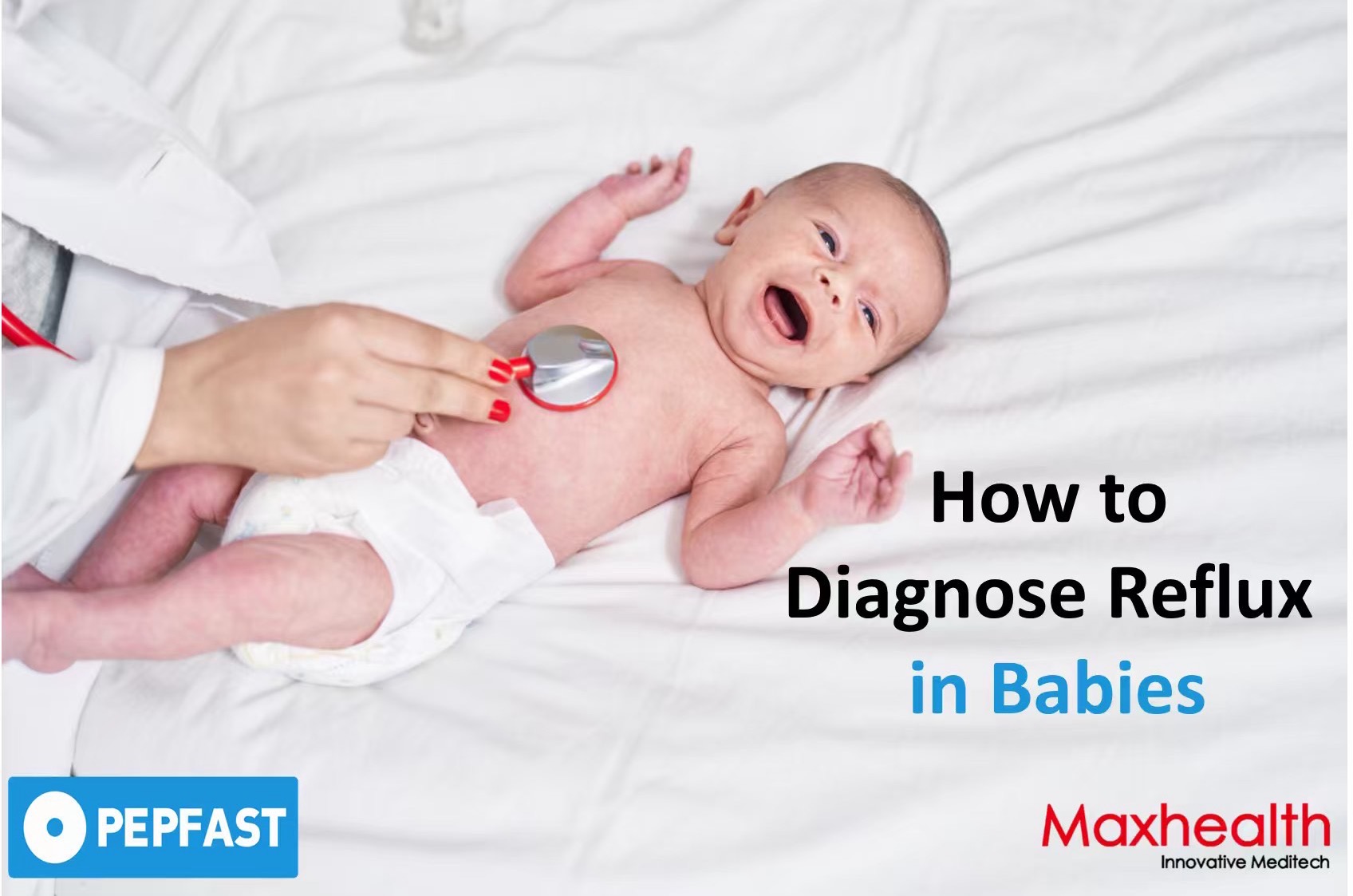
Parents of infants who spit up frequently or older children who complain of a burning throat often hear the same reassurance: “They’ll grow out of it.” For many, that is true. But when symptoms persist—poor weight gain, unexplained coughing, hoarseness, or feeding refusal—the question becomes: how do you diagnose reflux in a child without subjecting them to invasive tests that are difficult or impossible to perform?
Endoscopy requires sedation and carries risks in small children. Twenty‑four‑hour pH monitoring involves a thin tube passed through the nose and left in place for a full day—an experience most adults find uncomfortable, let alone a toddler. The good news is that a non‑invasive alternative exists: salivary pepsin testing. It is safe, simple, and can be adapted for even the youngest patients with a little help from a clinician.
Why Diagnosing Reflux in Children Matters
Gastroesophageal reflux is common in infants. More than half of all babies spit up regularly, and most outgrow it by 12–18 months. However, gastroesophageal reflux disease (GERD) affects a smaller subset, leading to complications such as esophagitis, poor growth, respiratory symptoms, and feeding aversions [1]. Laryngopharyngeal reflux (LPR)—where stomach contents reach the throat—can cause chronic cough, hoarseness, and even stridor in children.
Delaying diagnosis means delaying treatment. Untreated reflux in children has been linked to dental erosion, chronic otitis media, and worsening asthma [2]. But the traditional diagnostic toolkit is poorly suited for pediatric patients.
The Problem with Invasive Testing in Children
Endoscopy under general an aesthesia is sometimes necessary to rule out eosinophilic esophagitis or structural anomalies, but it is not a first‑line test. It requires fasting, intravenous access, and recovery time—significant burdens for a child and family. Moreover, endoscopy can be normal in up to 70% of children with reflux symptoms because the damage is non‑erosive [1].
Twenty‑four‑hour pH‑impedance monitoring is more sensitive but equally invasive. The nasal catheter can cause discomfort, restrict activity, and disrupt sleep. Many children cannot tolerate it, and the test is often abandoned or yields unreliable results. Even the wireless Bravo pH capsule, while avoiding the nasal tube, still requires endoscopic placement and later detachment—again requiring sedation.
These limitations have left many children undiagnosed or misdiagnosed, treated empirically with acid‑suppressing medications that may not address the root cause.
A Non‑Invasive Alternative: Salivary Pepsin Testing
Pepsin is a digestive enzyme produced exclusively in the stomach. It should not be present in saliva or throat secretions. When it is, that is direct evidence that gastric contents have refluxed into the upper aerodigestive tract [3]. Salivary pepsin testing has been extensively validated in adults, and its application in pediatrics is growing.
The test is straightforward. A small sample of saliva is collected—either by asking an older child to spit into a tube or, for infants and young children who cannot spit, by a clinician using a soft suction catheter or a sterile pipette to gently aspirate saliva from the mouth. This is a brief, painless procedure that causes no more discomfort than a routine oral examination. The sample is then applied to a lateral flow device, and results are available in approximately 15 minutes.
What the Evidence Shows in Children
A 2024 systematic review examined the diagnostic utility of salivary pepsin measurement in pediatric reflux. The authors concluded that salivary pepsin testing offers a “non‑invasive, practical, and well‑tolerated method” for detecting reflux in children, with sensitivity and specificity comparable to adult studies [2]. In a prospective study of 60 children with suspected LPR, pepsin positivity correlated strongly with both symptom scores and response to treatment [1].
Another study specifically evaluated the feasibility of saliva collection in infants using a simple oral swab. The procedure was well accepted by parents and infants, with no adverse events. Pepsin levels were significantly higher in infants with clinical reflux than in healthy controls [3].
While no single test is perfect, salivary pepsin testing provides objective evidence that can guide clinical decisions—whether to escalate treatment, refer for further evaluation, or confidently reassure parents that reflux is not the cause.
Why Choose Saliva Testing Over Blind Treatment
Many paediatricians currently prescribe acid‑suppressing medications based on symptoms alone. However, proton pump inhibitors (PPIs) are not benign. Long‑term use in children has been associated with increased risk of respiratory infections, gut dysbiosis, and nutrient malabsorption [2]. Treating without a diagnosis risks unnecessary exposure and may delay identification of other conditions.
By contrast, a positive pepsin test provides objective justification for treatment, while a negative test prompts a search for alternative causes—such as allergies, anatomical abnormalities, or functional disorders. For parents and clinicians alike, having a clear answer reduces anxiety and avoids the cycle of “trial and error” prescribing.
Introducing Pepfast for Pediatric Settings
Pepfast is a rapid, non‑invasive pepsin test that delivers results in 15 minutes without centrifugation or laboratory equipment. It is CE‑marked, FDA‑cleared, and NMPA‑registered, making it available for clinical use in multiple regions. The same test that works for adults can be adapted for children using clinician‑assisted saliva collection. With a simple, visual readout, Pepfast enables pediatricians, ENTs, and gastroenterologists provide timely, evidence‑based care for even the youngest patients.

❓Frequently Asked Questions
1. How accurate is salivary pepsin testing in children?
Studies have shown good correlation with clinical symptoms and treatment response. Sensitivity and specificity are comparable to adult data, with a 2024 systematic review supporting its use as a practical diagnostic tool [2,3].
2. What if my child cannot spit?
A clinician can collect saliva using a sterile pipette, soft suction catheter, or oral swab. The procedure is quick and causes minimal discomfort.
3. Is Pepfast approved for use in children?
Pepfast is indicated for use under clinical guidance. The product itself has no age restriction. While formal pediatric labelling varies by region, the test can be used off‑label in children at the clinician’s discretion, with appropriate consent.
4. Why not just try medication and see if it works?
Empiric treatment with acid suppressants may provide temporary relief but does not confirm the diagnosis. It also carries risks with long‑term use. An objective test helps target therapy to those who truly need it and avoids unnecessary medication [2].
References
1. Bobin F, Lechien JR, Saussez S, et al. (2021). Salivary pepsin as a diagnostic biomarker for laryngopharyngeal reflux in children: a pilot study. European Archives of Oto-Rhino-Laryngology, 278(8):2911-2918.
2. DiMaria C, Russell JL, Giliberto JP, et al. (2024). Systematic review of salivary pepsin testing for pediatric reflux. International Journal of Pediatric Otorhinolaryngology, 178:111895.
3. Johnston N, Ondrey F, Rosen R, et al. (2020). Pepsin detection in saliva as a non invasive biomarker of reflux in infants. Journal of Pediatric Gastroenterology and Nutrition, 70(3):345-350.



Copyright @ 2026 Maxhealth Innovative Meditech (Wuxi) Ltd All Rights Reserved.  Network Supported
Leave A Message